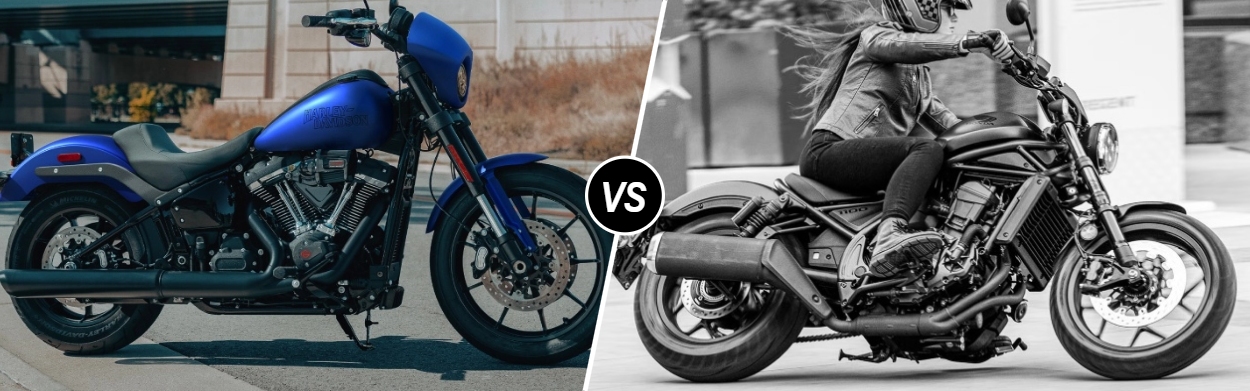
2026 Harley-Davidson® Low Rider® S vs 2026 Honda Rebel 1100 DCT
When riders compare performance cruisers for life around Chester County, the conversation often becomes 2026 Harley-Davidson® Low Rider® S vs 2026 Honda Rebel 1100 DCT. Both are purpose-built for fast backroad runs and confident urban sprints, but they take different paths to excitement. The Low Rider® S is a factory-hot-rodded Milwaukee-Eight® 117 High Output machine with track-influenced suspenders, a performance-tuned 2-into-1 exhaust, and a full suite of Cornering Rider Safety Enhancements. The Rebel 1100 DCT counters with a lively 1084cc parallel-twin, an automatic Dual-Clutch Transmission, and a lightweight, compact chassis. For riders navigating curves out toward the Brandywine and slipping through town traffic in West Chester, PA, the question is less “what’s new?” and more “what feels right?” The Low Rider® S rewards a spirited right hand with 114 HP and 128 ft-lbs, stout brakes, and an inverted fork that keeps the front end planted on patchy pavement. Honda’s DCT is friendly and refined, but the Harley-Davidson® delivers a visceral, connected ride that speaks directly to enthusiasts who want more feedback, more control, and more headroom for growth. That’s why our team at West Chester Harley-Davidson® sees riders gravitating toward this bike.
| Feature | 2026 Harley-Davidson® Low Rider® S | 2026 Honda Rebel 1100 DCT |
|---|---|---|
| Milwaukee-Eight® 117 High Output V-Twin | Yes | No |
| Over 110 HP factory rating | Yes | No |
| Cornering ABS (C-ABS) and Cornering Traction Control (C-TCS) | Yes | No |
| Selectable Ride Modes | Yes | Yes |
| Tire Pressure Monitoring System (TPMS) | Yes | No |
| Inverted 43 mm front fork | Yes | No |
| Rear monoshock suspension | Yes | No |
| Low-maintenance belt final drive | Yes | No |
| 5.0-gallon fuel tank | Yes | No |
| Cruise control | Yes | Yes |
Key Features
Framing the 2026 Harley-Davidson® Low Rider® S vs 2026 Honda Rebel 1100 DCT comparison through must-have features reveals clear differences in intent. The Low Rider® S comes with the Milwaukee-Eight® 117 High Output engine, a performance-tuned 2-into-1 exhaust, the Heavy Breather intake, and taller rear shocks matched to a retuned suspension. It layers on selectable Ride Modes and Harley-Davidson® Rider Safety Enhancements, including Cornering ABS and Cornering Traction Control, to help steady the chassis when the pavement surprises you mid-corner. The front end uses a 43 mm inverted fork with stout triple clamps to deliver crisp steering and excellent braking support. Up top, a 4-inch analog speedometer with a comprehensive digital display keeps essentials front and center without glare or distraction. The Rebel 1100 DCT makes its case with an automatic transmission, a 5-inch TFT, and useful technology like Honda Selectable Torque Control, plus standard ABS and cruise control. Its compact wheelbase and friendly ergonomics make it approachable for a wide range of riders. Yet in West Chester, PA, where roads can transition from brick-lined borough streets to creased, cambered two-lanes in a few miles, the Low Rider® S puts more advanced cornering-aware safety tools in your pocket, adding confidence when cornering lines get tight or surfaces go slick.
Dimensions
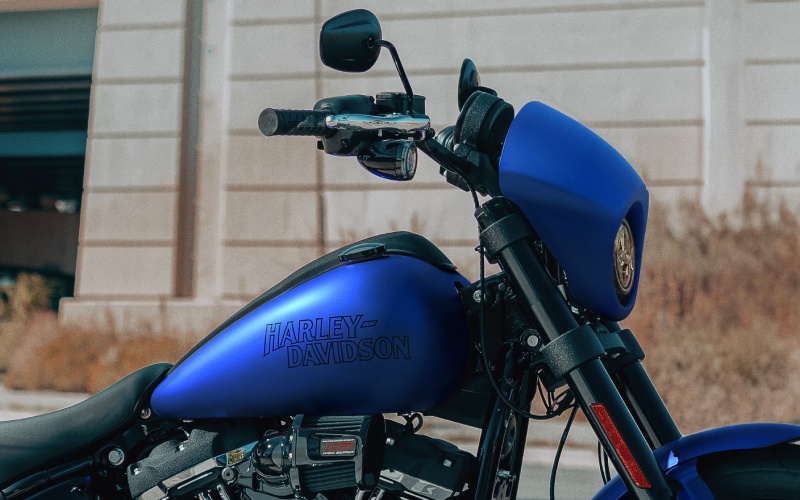
Dimensionally, the Low Rider® S and Rebel 1100 DCT pursue agility, but the Harley-Davidson® brings a longer, more planted stance. The Low Rider® S measures 92.9 inches overall with a 63.6-inch wheelbase, a 27-inch laden seat height, and a 5.0-gallon fuel capacity. That broader footprint and generous tank pair well with weekend loops out toward Downingtown or longer hops through Philadelphia, PA, after work. The Rebel 1100 DCT lists a 59.8-inch wheelbase and a 27.9-inch seat height, and it carries 3.6 gallons of fuel. Around town, the Honda’s compact size helps in tight alleyways or crowded borough parking. On open stretches west of town, the Harley-Davidson®’s longer wheelbase and additional fuel capacity translate to fewer stops and a calmer feel at speed. Both bikes keep seat heights welcoming, but the Low Rider® S offers a steep-backed solo seat that helps lock the rider in when accelerating over rippled pavement or when bracing for sharper braking zones you might encounter approaching a short yellow at Gay and High.
Engine
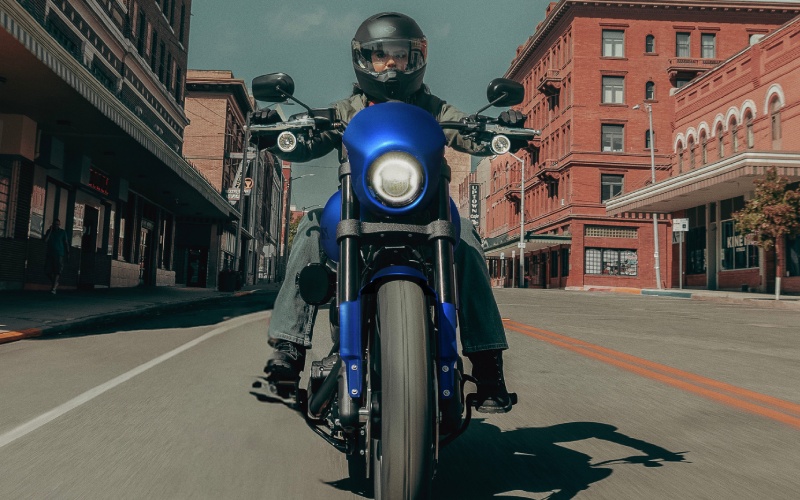
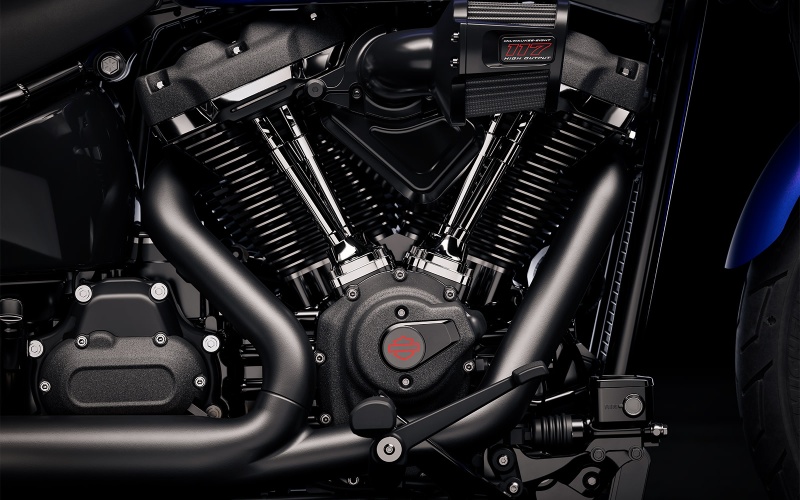
Core power is where the Milwaukee-Eight® 117 High Output distinguishes itself. On the 2026 Low Rider® S, you get 114 HP and 128 ft-lbs, a Heavy Breather intake for better airflow, and a performance-tuned 2-into-1 exhaust that pulls hard through the midrange. The V-Twin’s character delivers muscular low-end punch, ideal for overtakes on Route 202 or quick launches onto the ramp from Paoli Pike. Honda’s 1084cc Unicam® parallel-twin is proven and responsive, tuned for smooth torque delivery and efficient cruising, especially when paired with the DCT. Its 10.5:1 compression ratio and twin-cylinder layout create a different flavor of acceleration—linear, composed, and flexible. Riders who prefer a stronger mechanical heartbeat and a powerband that surges with intent will appreciate the Harley-Davidson® approach. Riders focused on easygoing cruising may find the Honda’s calmer, more muted pulse appealing. In West Chester, PA, where quick, decisive gaps matter, the Milwaukee-Eight® 117 High Output tends to feel more authoritative.
Performance
The performance story builds beyond peak numbers. The 2026 Harley-Davidson® Low Rider® S posts 114 HP and 128 ft-lbs, but the real win for local riders is how that torque arrives early and hangs on. With 31.3 degrees of lean on both sides, it’s game for carving familiar sweepers north of town, and its performance-tuned suspension keeps the chassis stable when you brake deeper into a corner. The 2026 Harley-Davidson® Low Rider® S vs 2026 Honda Rebel 1100 DCT contrast shows the Honda returning excellent rideability in mixed traffic, aided by DCT smoothness and a short wheelbase for nimble lane changes. Yet when hustling along S Creek Road’s narrow, shaded bends, the Harley-Davidson®’s inverted fork, stronger engine braking management, and cornering-aware safety features help the rider hold a clean, confident line. If your weekend miles include ambitious pace changes, the Low Rider® S offers the reserves and composure to keep you in the flow.
Drive Train
Drive-train personality shapes day-to-day satisfaction. The Low Rider® S uses a six-speed manual gearbox matched to a low-maintenance belt final drive. Around town and on winding Chester County roads, riders enjoy the tactile control of a manual clutch and the clean, quiet running of a belt that shrugs off grime and reduces routine upkeep. Harley-Davidson® Drag-Torque Slip Control works in the background to temper abrupt engine braking on downshifts, especially welcome on slick patches near shaded tree lines. The Rebel 1100 DCT’s six-speed Dual-Clutch Transmission is a standout for riders who want fuss-free shifts, with a choice of fully automatic or manual paddle inputs. It’s smooth and well-calibrated, though the chain final drive requires more frequent cleaning and adjustment—something to consider if you commute year-round on salted winter roads or traverse gravel connectors. In practice, the Harley-Davidson® system rewards riders who love precision inputs, while the Honda emphasizes simplicity.
Chassis
Chassis details steer the 2026 Harley-Davidson® Low Rider® S vs 2026 Honda Rebel 1100 DCT discussion toward handling confidence. The Harley-Davidson® features a single-cartridge 43 mm inverted fork with aluminum triple clamps and a hidden, free-piston rear monoshock with hydraulic preload adjustment. The inverted fork adds stiffness for more precise steering and improved braking support, while the monoshock’s direct connection enhances feedback over patched surfaces around West Goshen. Braking uses a 4-piston fixed front caliper and 2-piston floating rear, clamping floating rotors designed for consistent feel. The Honda responds with a 43 mm conventional fork and dual rear shocks, plus a radial-mount front caliper. Its lighter curb weight gives it an eager turn-in at slower speeds, but the fork architecture and twin-shock rear simply communicate differently when hustling over mid-corner bumps. Riders who prize a locked-in front end and a planted, one-piece rear response tend to connect with the Low Rider® S setup.
Electric
Electronics and lighting wrap the package in modern control. The Low Rider® S equips an All-LED Lighting Package—headlamp, tail/stop, and LED bullet turn signals—improving conspicuity in evening traffic and on foggy mornings in West Chester, PA. The 4-inch analog speedometer integrates a crisp digital display for gear position, fuel level, ride modes, heated gear status, traction control, ABS, TPMS, cruise control, trip functions, and more. Selectable Ride Modes let the rider tailor throttle response and intervention to conditions, from Borough streets after a shower to drier weekend backroads. Honda brings a bright 5-inch TFT display and Honda RoadSync smartphone connectivity, plus cruise control, which touring-minded riders will appreciate on longer stints to Wilmington, DE. Yet the Harley-Davidson® advantage is how seamlessly the information display and Rider Safety Enhancements work together—especially the inclusion of TPMS and cornering-aware aids that help the rider stay ahead of surface changes.
Rider Safety Enhancements
Harley-Davidson® bundles a robust portfolio of Rider Safety Enhancements on the Low Rider® S, including ABS, Traction Control, Drag-Torque Slip Control (DSCS), Tire Pressure Monitoring System (TPMS), and cornering variants that account for lean angle—C-ABS, C-TCS, and C-DSCS. This adds a crucial safety margin when a line tightens mid-corner or when crossing damp patches after a light rain. Locally, that matters on shaded bends out by the Brandywine or when leaves collect near storm drains around the Borough. The Rebel 1100 DCT’s standard ABS and Honda Selectable Torque Control deliver meaningful support and rider modes, but it does not add cornering-aware braking and traction. For riders who want a safety net that discreetly helps maintain stability while leaned, the Harley-Davidson® approach stands out. It doesn’t ride the bike for you; rather, it preserves traction and balance when the road throws a late surprise—a real advantage in West Chester, PA and the surrounding countryside.
Why Choose the 2026 Harley-Davidson® Low Rider® S in West Chester, PA
- Performance headroom and feel: 114 HP and 128 ft-lbs with a performance-tuned chassis deliver crisp responses and composed cornering that reward skilled inputs on local two-lanes.
- Confidence in varied conditions: Cornering ABS, Cornering Traction Control, and TPMS support cleaner lines and better stability when surfaces change unexpectedly.
- Lower upkeep, longer range: Belt final drive reduces routine maintenance and the 5.0-gallon tank cuts down on fuel stops between borough errands and weekend loops.
For riders weighing 2026 Harley-Davidson® Low Rider® S vs 2026 Honda Rebel 1100 DCT, our recommendation is the Low Rider® S for its deeper performance reserves, advanced cornering-aware safety tech, and real-world convenience in West Chester, PA.
Request more 2026 Harley-Davidson® Low Rider® S vs 2026 Honda Rebel 1100 DCT in West Chester, PA information
Choosing between these two capable cruisers comes down to personality and priorities. The Rebel 1100 DCT is friendly, flexible, and tech-forward, with a compact stance and helpful automation for commuters splitting time between the Borough and errands to Wilmington, DE. The Low Rider® S, by contrast, is the one to reach for if you crave authoritative torque, sharper chassis responses, and a cornering-aware safety suite tuned for unpredictable pavement. That blend fits the way many of us actually ride—navigating town, blasting county sweepers, and hopping over to Philadelphia, PA, for an evening run without constant fuel stops. At West Chester Harley-Davidson®, we focus on motorcycles that elevate every mile, not just the spec sheet. If your instinct is to choose the bike that invites you to ride more, hone skills, and enjoy a visceral connection on familiar roads, the 2026 Harley-Davidson® Low Rider® S answers that call in a way few others can.