
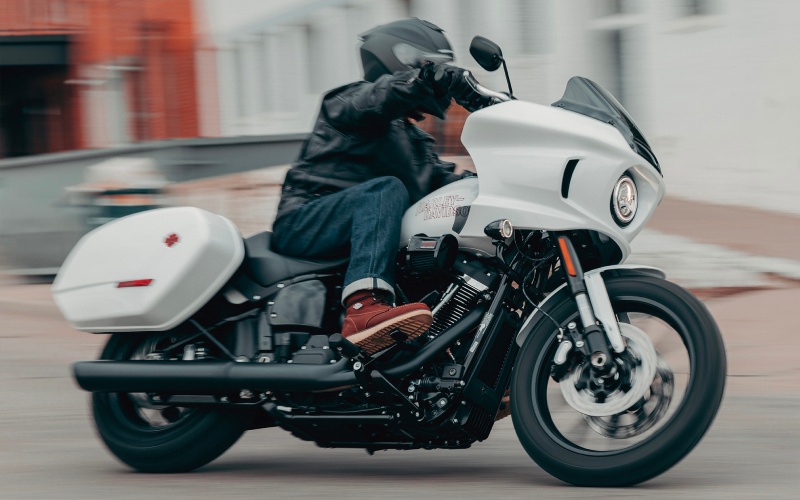
West Chester Harley-Davidson® - Is 2026 Harley-Davidson® Low Rider® ST stable on Delaware Memorial Bridge near Wilmington, DE?
The open span over the Delaware River can throw serious gusts at riders, especially as you crest the twin towers and meet the slipstream of tractor-trailers heading for I-295 and the New Jersey Turnpike. If you are considering the 2026 Harley-Davidson® Low Rider® ST and wondering how it feels crossing the Delaware Memorial Bridge near Wilmington, DE, we can share how the bike’s chassis, fairing, electronics, and ergonomics come together to inspire confidence in blustery, real-world conditions.
At West Chester Harley-Davidson®, we work with riders who commute from Newark and Pike Creek, hop on the bridge from I-95 or I-495, and run that wind corridor in all kinds of traffic. The 2026 Low Rider® ST was engineered with stability in mind—from its FXRT-inspired fairing and performance-tuned suspension to its selectable ride modes and comprehensive Rider Safety Enhancements—so you can keep your line steady when the breeze stiffens and the deck gets gusty.
The FXRT-inspired fairing and why it matters in crosswinds
That signature fairing does more than serve attitude. Its broad, structured shape helps manage airflow around the rider, reducing the sudden tug you can feel when strong side gusts hit open bars and a rider’s chest. On a wide, exposed bridge, that wind management translates into fewer abrupt inputs and more predictable steering feel. Pair that with the Low Rider® ST’s All-LED Lighting and you get clear lane and deck visibility when gray water and spray cut contrast near dawn or dusk.
Behind the fairing, the 4-inch analog speedometer with digital indicators keeps the data you actually need—gear position, traction control status, TPMS, and ride modes—right in view. That makes it easier to focus forward and leave fewer distractions when the wind starts to swirl around larger vehicles or as you pass expansion joints spaced across the span.
Chassis poise, geometry, and planted feel
Crosswind stability starts with a calm chassis. The 2026 Low Rider® ST uses a single-cartridge 43 mm inverted front fork and a hidden, free-piston coil-over monoshock with hydraulic preload adjustment. That setup helps the front end track cleanly while the rear stays composed over joints and grooved sections. It is tuned for the kind of high-speed, real-world bumps you find as the deck transitions and traffic compresses or expands near the toll approach.
The platform’s geometry—28 degrees of rake, a 63.6-inch wheelbase, and 31.3 degrees of lean angle to each side—strikes a stable middle ground. You feel quick response when you make a small countersteer correction, yet the bike resists the twitchiness you might get on a steeper, shorter chassis in a sharp crosswind. Michelin Scorcher 31 tires—110/90B19 up front and 180/70B16 out back—deliver a broad contact patch and consistent feedback, which boosts your confidence when the breeze picks up or the deck is damp from river spray.
Weight distribution also helps. With a 5-gallon tank located low in the frame and a compact Milwaukee-Eight® 117 High Output powertrain, the Low Rider® ST carries mass near the center, keeping roll reactions smooth when gusts try to nudge you off line. That poise is reinforced by 4-piston fixed front and 2-piston floating rear brakes for composed speed adjustments without upsetting the chassis in moving air.
Electronics that support you when the wind changes its mind
Rider Safety Enhancements on the 2026 Low Rider® ST add another layer of control for bridge crossings that combine crosswinds with dense traffic. Cornering Enhanced Anti-lock Brake System (C-ABS) and Cornering Enhanced Traction Control System (C-TCS) help the motorcycle maintain grip while leaned—useful when a side gust gently tips the bike while you are decelerating or throttling on. Drag-Torque Slip Control System (DSCS) and Cornering Drag-Torque Slip Control System (C-DSCS) moderate sudden rear-wheel slip under powertrain-induced deceleration—helpful if you downshift as wind resistance spikes near a box truck’s wake. Tire Pressure Monitoring System (TPMS) keeps you informed of pressure changes that can meaningfully alter how planted the bike feels in wind.
Selectable ride modes let you tailor throttle response and electronic intervention to conditions. If crosswinds are stiff or the bridge deck is damp, choose a more measured throttle map for smoother roll-on, then return to a sharper setting once you are back on I-95 or US-202 where airflow is steadier and lanes widen. Cruise control is onboard for longer steady-state stretches, but when gusts are unpredictable, many Wilmington-area riders prefer to keep manual throttle control for instant adjustments.
What this feels like on the Delaware Memorial Bridge
Picture the climb onto the span from I-295 as the river opens to your left and right—the wind builds, then softens, then rebounds as you pass a tractor-trailer. On the Low Rider® ST, the fairing takes the first punch, the fork and monoshock keep the tires planted over joints, and the long wheelbase calms the chassis. A subtle countersteer corrects your line without drama. If a gust nudges you while rolling off the throttle into thicker traffic, C-ABS and DSCS work in the background while the broad, predictable Michelin contact patch keeps feedback consistent. You settle back into the lane center, LED headlamp cutting through spray, and carry on toward the split for I-95 or US-13.
Once you are off the span, the same setup that kept you steady in wind makes local roads like Concord Pike and Governor Printz Boulevard feel composed when surface quality varies or paint lines are slick after a passing shower. And when the storm clears, that Milwaukee-Eight® 117 High Output—rated at 114 HP and 128 ft-lbs of torque—reminds you this is still a sport-touring machine built for the long way home.
Two cu ft of lockable luggage provides space to stash a rain shell or heated gear controller, and the Performance-Adapted Solo Seat helps keep you centered and braced so wind gusts translate into minor inputs rather than full-body corrections. USB-C charging keeps navigation and comms powered for those multi-state runs when the bridge is only the first chapter.
If you ride year-round around Wilmington, DE, count on the Low Rider® ST’s full LED lighting suite to increase conspicuity on gray days and the 4-inch display to surface the right status icons—ride mode, TPMS, and traction control—at a glance. The bike’s balance of mass, geometry, suspension quality, and safety tech is what turns a windy crossing from a white-knuckle moment into a routine part of the ride.
For riders who split time between the river span and winding back roads in the Brandywine Valley or Creek Road, this combination of stability and agility is exactly why the Low Rider® ST resonates. It is sport-touring with a West Coast stance—dialed for the mid-Atlantic’s mix of bridges, toll plazas, and rolling two-lanes.
Below are a few focused setup pointers that our team at West Chester Harley-Davidson® recommends before heading onto the bridge on gusty days. These are simple steps that pay back in composure and confidence.
- Preload and sag: Use the rear shock’s hydraulic preload to match your load, keeping geometry neutral for predictable steering in crosswinds.
- Tire pressures: Verify pressures via the TPMS and a quality gauge—proper inflation preserves the tire profile that resists wind-induced wander.
- Ride mode: Select a smoother throttle map in gusty or wet conditions for steadier roll-on and less chassis pitch.
- Luggage balance: Distribute weight evenly in the saddlebags—balanced mass resists wind steering and mid-corner wiggles.
- Line discipline: Hold a late-apex lane position near the windward side when passing large vehicles so buffeting has room to dissipate.
When you approach the tolls and the wind funnels between barriers, steadiness and vision matter most. Use the bike’s stable idle and smooth clutch take-up to minimize abrupt inputs, then bring the revs back into the Milwaukee-Eight® 117 High Output’s sweet spot as you clear the plaza and blend back to highway pace.
- Check indicators: Confirm no TPMS or traction control alerts on the 4-inch display before you merge onto I-295.
- Scan traffic: Identify taller vehicles early—anticipate wake turbulence and plan gentle, earlier corrections.
- Grip and posture: Keep a light, flexible grip on the bars and anchor with your core—let the chassis and fairing do the wind work.
- Throttle finesse: Maintain a steady roll and avoid abrupt roll-off near expansion joints where gusts often spike.
- Brake control: Use progressive front-brake pressure; let C-ABS help you if a gust arrives as you shed speed into a lane shift.
The 2026 Low Rider® ST does not magic the wind away, but it equips you with design and technology that make Wilmington-area crossings far less dramatic. If your riding includes regular trips across the Delaware Memorial Bridge, you will appreciate how the fairing, chassis, and Rider Safety Enhancements smooth out the variables that wind and traffic throw at you.
Frequently Asked Questions:
Will the 2026 Harley-Davidson® Low Rider® ST feel stable on the Delaware Memorial Bridge near Wilmington, DE?
Yes—its FXRT-inspired fairing, 43 mm inverted fork, coil-over monoshock with hydraulic preload, and balanced geometry help the bike hold a line in crosswinds common on the span. Michelin Scorcher 31 tires provide consistent feedback over expansion joints, while Rider Safety Enhancements—C-ABS, C-TCS, DSCS, C-DSCS, and TPMS—support smooth braking, controlled acceleration, and proper tire pressure. In practice, that combination reduces the twitch and push you can feel on exposed decks, so you make small, confident corrections rather than big, reactive ones.
Which ride mode is best for gusty Wilmington, DE conditions?
Select a mode that delivers a more measured throttle response and increased electronic intervention. That gentler map helps you roll on smoothly when wind loads change near large vehicles or barrier openings. You can switch back to a sharper response once the air calms beyond the bridge or on protected stretches of I-95.
What simple setup changes improve crosswind stability before I hop on I-295?
Confirm pressures via TPMS and a manual gauge, set rear preload for your load so the bike sits level, balance weight between saddlebags, and keep your upper body relaxed with a light bar grip. Those basics—combined with the Low Rider® ST’s fairing, chassis, and safety systems—go a long way toward a composed bridge crossing.
If you want help tailoring suspension preload, discussing windscreen options, or mapping a Wilmington-area route that minimizes the worst gust corridors on blustery days, our team at West Chester Harley-Davidson® is ready to talk through details that match how and where you ride. Our goal is straightforward—equip you and your 2026 Harley-Davidson® Low Rider® ST to feel settled and in control from the tolls to the turnpike.