West Chester Harley-Davidson® - How does the 2026 Harley-Davidson® Road Glide® handle I-95 lane changes near Smyrna, DE?
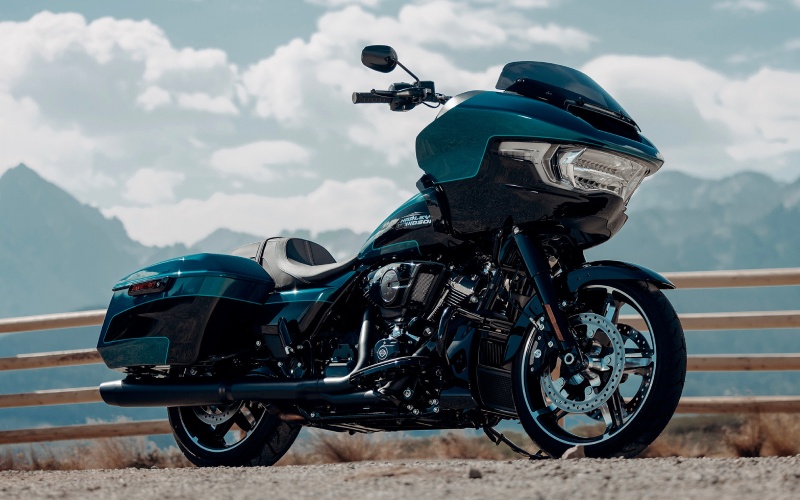
Riders who split time between town streets and the I-95 corridor want a touring motorcycle that feels planted in the fast lane and calm when the wind gets pushy. The 2026 Harley-Davidson® Road Glide® pairs a frame-mounted Sharknose fairing with a stable chassis and rider-focused tech to make quick, predictable lane changes feel easy near Smyrna, DE — even when traffic is dense and air is turbulent.
From engine response to aerodynamics, the Road Glide® is tuned to work with you at highway speeds, not against you. Here is a closer look at what matters when you are scanning mirrors, checking blind spots, and executing a clean, confident move from one lane to the next.
Why the frame-mounted Sharknose matters in highway traffic
Highway traffic throws plenty of dirty air your way. Because the Road Glide® mounts its Sharknose fairing to the frame, the steering inputs you feel are less influenced by wind pressure and wake from large vehicles. That design advantage becomes obvious when you are near trucks or in crosswinds — the bars stay lighter, and the bike tracks more consistently. The redesigned fairing further refines airflow around the rider and integrates LED Signature Lighting for a better view and greater conspicuity when you are signaling and moving across lanes.
Power that responds when you need it
The Milwaukee-Eight® 117 engine’s 130 ft-lbs of torque, delivered low in the rev range, makes decisive passes feel natural. Roll on from cruising speed and the bike surges without drama, giving you margin to move. Selectable ride modes let you align throttle response with conditions. In slippery or crowded situations, you can choose a setting that smooths response; when traffic opens up, a sharper setting adds urgency to your inputs. Either way, the powertrain’s calm character reduces stress during quick decisions.
Stability from geometry and suspension
With a 64-inch wheelbase, 26 degrees of rake, and 6.8 inches of trail, the chassis is designed for tracking straight and holding a line with minimal correction. 49 mm Dual Bending Valve forks and dual outboard emulsion rear shocks with preload adjustability keep the contact patches communicating over patched asphalt and bridge seams. The combination helps the Road Glide® feel unflustered when you cross grooves or expansion joints at an angle during a lane change.
Brakes and Rider Safety Enhancements that back you up
Dual front 4-piston fixed calipers clamp floating rotors for consistent braking feel, while Electronic Linked Braking (ELB) balances front and rear pressure when you call for it at the lever. Cornering Enhanced Anti-lock Brake System (C-ABS) and Cornering Enhanced Traction Control System (C-TCS) are designed to help when you are leaned or changing direction, adding a layer of composure to your inputs. Vehicle Hold Control (VHC) proves its worth on ramps and grades, so you can manage gaps and merges without rolling back. Tire Pressure Monitoring System (TPMS) keeps you informed about tire status — a small detail that can make a big difference at highway speeds.
All of these systems work in the background so the Road Glide® remains a rider’s motorcycle. They are there to support, not to replace, your decision-making.
Skyline™ OS keeps focus forward
The 12.3-inch Skyline™ OS display consolidates navigation, media, and phone into a single, bright interface. Apple CarPlay (wireless or wired) lets you follow turn-by-turn guidance and manage calls by voice through a paired headset. When traffic density rises around Smyrna, DE, less distraction equals more attention for mirrors, shoulder checks, and lane position — exactly what you need for smooth, confident maneuvers.
Another plus is the clean audio delivery from two 5.25-inch fairing speakers powered at 50 watts per channel. If you rely on voice prompts, they remain clear enough above highway noise to keep your eyes up and your hands steady on the bars.
Practical tips for cleaner, calmer lane changes
Technique still matters — the Road Glide® just gives you a friendlier platform to execute it. Consider the following best practices next time you are on I-95:
- Preload the pass: Create space first, then roll on the Milwaukee-Eight® 117 smoothly for a decisive move.
- Use the fairing’s advantage: Hold a light grip at the bars and let the frame-mounted Sharknose filter crosswind inputs.
- Set your view: Adjust mirrors to minimize blind spots and rely on LED Signature Lighting for strong signals.
- Pick a supportive ride mode: Choose the throttle map that best matches your traffic and surface conditions.
- Mind surface seams: Cross grooves and paint lines deliberately, with steady throttle and no abrupt lean change.
Comfort compounds confidence, too. The supportive seat and adjustable handlebars help you maintain relaxed shoulders and a neutral spine so your small steering inputs remain precise under pressure. And when the route stretches beyond Smyrna, DE, toward Philadelphia, PA, or down the coast, that comfort pays off mile after mile.
Bottom line: the Road Glide® platform is made for this job. Its stability, torque-rich power, and tech-forward cockpit reduce the friction of highway life, making lane changes feel measured, predictable, and repeatable — the hallmarks of a seasoned touring bike.
When you are comparing touring options, it helps to see how design decisions translate into real behavior in real traffic. West Chester Harley-Davidson®, serving King of Prussia, PA, Phoenixville, PA, and Smyrna, DE, can walk you through setup tips that make a tangible difference on I-95, Route 1, and the regional connectors you ride most. If a fixed-fairing touring motorcycle with built-in calm is what you have been searching for, the 2026 Harley-Davidson® Road Glide® deserves a close look.