West Chester Harley-Davidson® - Which delivers stronger real-world acceleration for Philadelphia, PA riders — the 2026 Harley-Davidson® Low Rider® S or the 2026 Honda Rebel 1100 DCT?
When riders ask about real-world acceleration, they usually want more than a number. They want to know how a motorcycle responds when merging onto I-76, passing on Route 202, or threading through stoplights on Gay Street. That’s why comparing the 2026 Harley-Davidson® Low Rider® S with the 2026 Honda Rebel 1100 DCT is so relevant—two bikes that reach the same mission in very different ways. One leans into a big-twin surge with a performance-tuned chassis; the other emphasizes easygoing smoothness with an automatic transmission and a compact footprint. West Chester Harley-Davidson® brings hands-on perspective to this question, serving Philadelphia, PA, Wilmington, DE, and King of Prussia, PA, with guidance grounded in how riders actually use their machines.
How Real-World Acceleration Feels Different
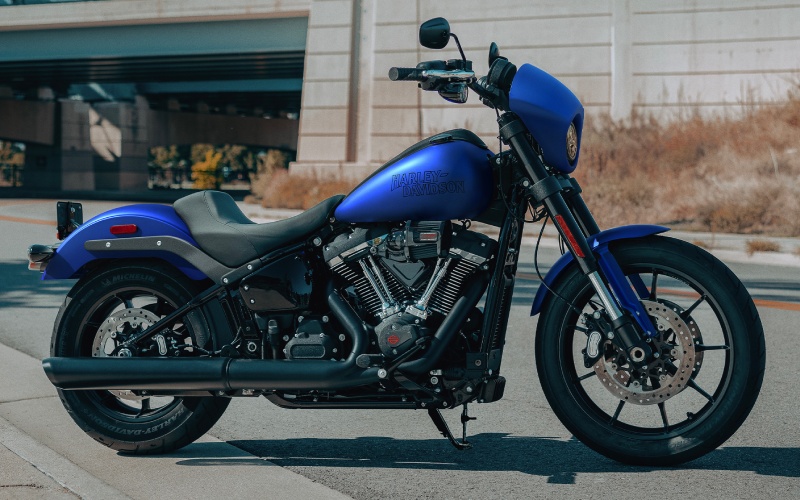
Acceleration isn’t just peak horsepower. It’s how quickly a bike builds thrust from typical speeds—35 to 65 mph passing, 0 to 30 mph off the line, and mid-corner roll-on. The 2026 Harley-Davidson® Low Rider® S posts 114 HP and 128 ft-lbs from the Milwaukee-Eight® 117 High Output V-Twin. That torque arrives early and hangs on, creating a wave of pull that feels effortless when shooting gaps near the US-202 on-ramps or overtaking on two-lane highways west of town. The 2026 Honda Rebel 1100 DCT’s 1084cc parallel-twin is responsive and tuned for smooth torque. With DCT, it fires off quick shifts that keep the engine in its sweet spot, and that smoothness is confidence-inspiring for new and returning riders.
Transmission Influence: Manual Authority vs Automatic Precision
The Low Rider® S runs a six-speed manual with strong engine-braking control from Drag-Torque Slip Control (DSCS), encouraging assertive corner entries and tidy downshifts. Riders who enjoy choosing gears and modulating clutch feel will appreciate how much control that yields in a fast-changing environment. The Rebel’s DCT is a technology standout—shifts are quick, consistent, and clutch-free, which is a major plus in stop-and-go traffic and during long commutes. There’s even a manual paddle mode for riders who like more input without a clutch lever. The trade-off is character: the Harley-Davidson® rewards engagement with more visceral acceleration; the Honda rewards convenience through precision automation.
Weight, Gearing, and Real-World Passes
On paper, the Honda is lighter. In practice, the Harley-Davidson®’s torque and gearing give it decisive thrust for 40-to-70 mph passes that matter on rural connectors around Chester County. It’s the difference between rolling on and going vs waiting for a downshift. The 5.0-gallon tank also stretches your window between stops, which keeps momentum on weekend loops without planning routes around fuel stations.
Chassis Confidence Under Acceleration
Putting power down is only useful if the chassis stays composed. The Low Rider® S equips a 43 mm inverted fork and a hidden monoshock, lending stiffness and feedback under braking and during hard corner exits. Cornering Rider Safety Enhancements (C-ABS, C-TCS, and C-DSCS) add a margin when mid-corner bumps or slick patches appear, helping the bike maintain its trajectory. The Rebel 1100 DCT counters with a conventional 43 mm fork, dual shocks, and a radial-mount front caliper—stable, approachable, and reassuring at everyday speeds. For riders who plan to push a faster pace, especially on uneven surfaces, the Harley-Davidson® chassis tends to feel more locked-in.
Tech That Shapes the Acceleration Experience
The Rebel’s 5-inch TFT and Honda RoadSync connectivity are strong lifestyle features that many commuters will love. Cruise control on both bikes eases longer slogs up I-476. The Harley-Davidson® approach focuses on rider feedback and key ride data delivered cleanly via a 4-inch analog speedometer with a crisp digital window—gear, fuel, ride modes, heated gear status, traction control, ABS, TPMS, and more. TPMS is a quiet hero; proper tire pressure preserves acceleration feel and stopping distances, especially after big day-night temperature swings.
Who Benefits Most From Each Bike?
If your daily riding is dense city traffic, the Rebel 1100 DCT removes workload—no clutch, quick shifts, and a nimble chassis help keep you smooth and calm. If your goals include spirited backroad rides, high-confidence passes, and a chassis that encourages you to refine lines with throttle, the Low Rider® S is the bike that grows with you. Its torque delivery and cornering-aware aids make acceleration more than a straight-line party trick—they make it part of the whole ride.
- Launch feel: The Low Rider® S delivers an immediate, muscular surge; the Rebel 1100 DCT steps out smoothly, prioritizing consistency.
- Passing power: Harley-Davidson® torque favors quick roll-ons; Honda’s DCT manages downshifts well but relies more on rpm.
- Chassis under load: Inverted fork and monoshock give the Low Rider® S extra stability when accelerating over imperfect pavement.
- Maintenance rhythm: Belt final drive on the Low Rider® S reduces routine upkeep; the Rebel’s chain needs periodic cleaning and adjustment.
Frequently Asked Questions:
Does the Harley-Davidson® have ride modes like the Honda?
Yes. The 2026 Harley-Davidson® Low Rider® S includes selectable Ride Modes integrated with its Rider Safety Enhancements, offering tailored throttle response and intervention for changing conditions.
How does DCT affect acceleration compared to a manual gearbox?
DCT provides seamless, clutch-free shifts that keep the engine in an optimal range, which is great for consistency. A manual gearbox, like on the Low Rider® S, gives riders more control over timing and engine braking, often translating to stronger, more deliberate roll-on acceleration in the real world.
Which bike feels more composed when accelerating mid-corner?
The Low Rider® S earns the nod thanks to its inverted fork, monoshock, and cornering-aware safety aids (C-ABS, C-TCS, C-DSCS) that help maintain stability when the road surface changes while leaned.
Is the Rebel 1100 DCT better for new riders?
Many newer riders appreciate the Rebel’s DCT for reducing workload in traffic and its approachable chassis. Riders who prefer to grow with manual control and crave a stronger performance ceiling typically gravitate to the Low Rider® S.
What about longer rides beyond the city?
Both can handle longer rides, but the Low Rider® S benefits from a 5.0-gallon tank and belt drive that simplify ownership for big-mile weekends, while the Rebel 1100 DCT’s automatic shifts and TFT convenience features shine on steady-state highway stretches.
Ultimately, “stronger acceleration” depends on what you value. If you want torque-rich thrust, manual command, and a chassis that stays calm when you ask for more, the 2026 Harley-Davidson® Low Rider® S sets the pace. If you want smoothness and simplicity in congested corridors, the 2026 Honda Rebel 1100 DCT is a compelling alternative. Either way, choose the one that supports the riding you actually do—then enjoy every mile.